
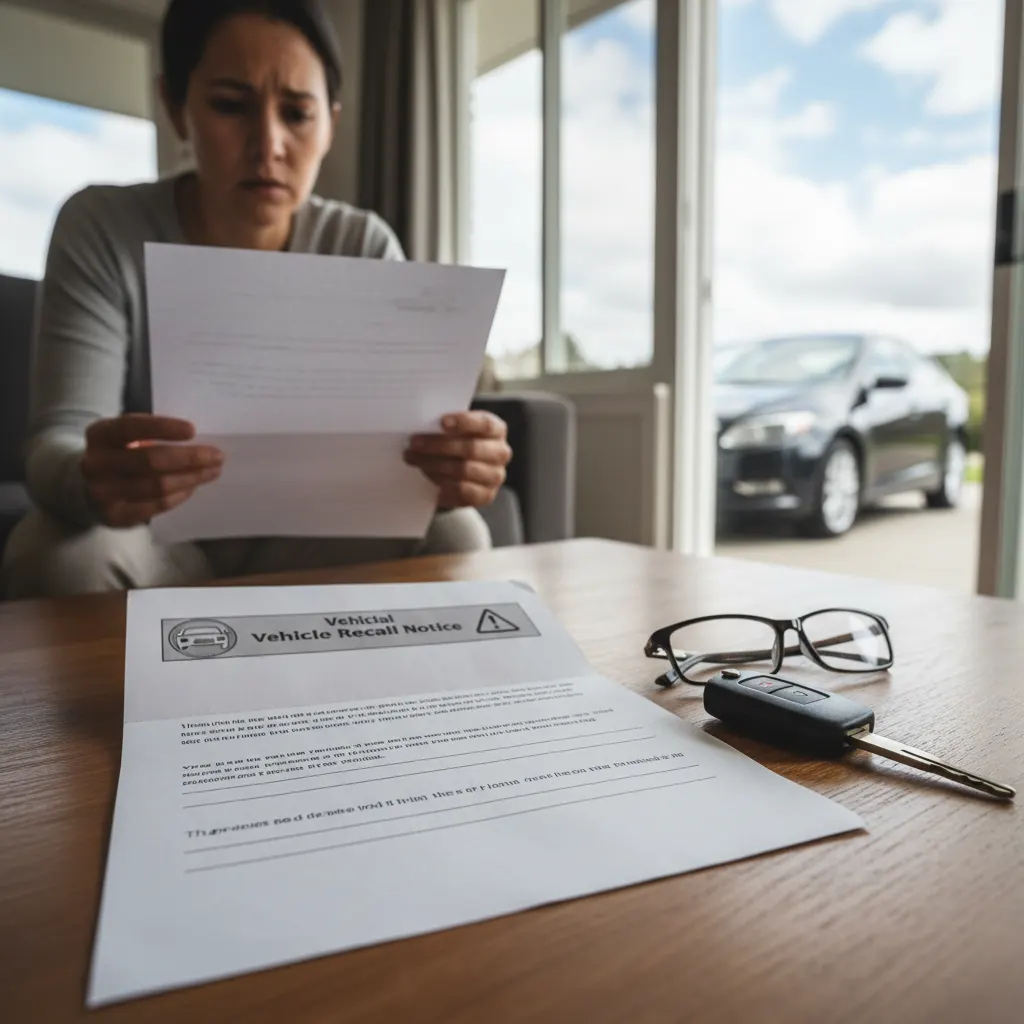
A manufacturer recall is a defect acknowledged by the brand and repaired free of charge in its network. Some are minor, others directly affect your safety. Here is how to find out whether your car is affected, and the recalls never to leave pending.
Is your car affected?
- Check with your vehicle identification number (VIN) on the brand’s website: it is the only check that confirms your specific car is affected. The VIN is on the registration document.
- Look at official recall lists: many countries publish them (in France, for example, the RappelConso website), and the European Union’s Safety Gate also lists dangerous products, including vehicles.
- Open the brand’s letters: manufacturers write to the registered keeper. If your address is out of date, the letter gets lost.
“Stop drive”: don’t use the car
For the most serious defects, such as some Takata airbags, the manufacturer may issue a “stop drive” instruction: the car must not be used until it is repaired. Contact the brand’s network, which arranges the repair.
Recalls never to ignore
- Airbags: a faulty airbag can injure instead of protect.
- Braking: leak, failing assistance, ABS.
- Steering: rare, but always serious.
- Fuel supply and fire risk: fuel leak, electrical wiring.
- Seat belts and seats: a faulty anchorage cancels the protection.
Buying second-hand?
Check the VIN on the brand’s website before buying, and ask for proof that recalls have been carried out: it is a service like any other, and should appear in the history. See also the pitfalls to avoid when buying used.
Keep a record
Record each recall carried out in your maintenance log, with the date and the document the garage gave you. When you sell, it is a question every informed buyer asks. In AutoKarnet, add it like any other service, with the document as a photo.
Sources: Safety Gate (European Commission) · RappelConso (France)