A hybrid car combines a combustion engine and an electric motor. This dual powertrain changes part of the maintenance, but not all of it. Here is what stays the same, what changes, and what you must never touch.
What stays the same as on a combustion car
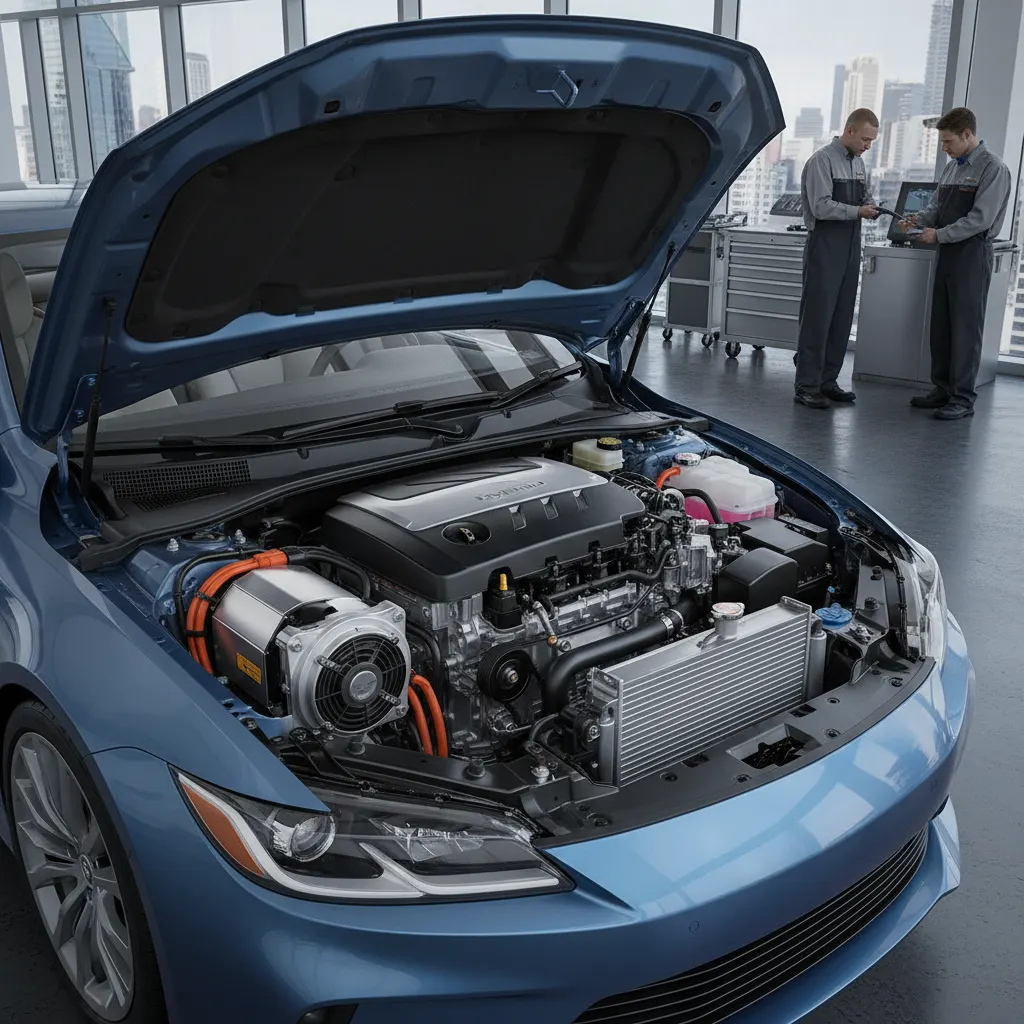
The combustion engine is maintained like any other engine: oil change, filters, spark plugs on a petrol, coolant, brake fluid. The intervals are those set by the manufacturer for your engine: the original service book gives them, and so does our maintenance schedule by model for many models. An engine that runs less often is not exempt from time-based intervals.
Brakes wear less, but still need watching
Regenerative braking slows the car down while recharging the battery: the pads and discs do less work. The flip side: brakes that are rarely used can seize or corrode. Have them checked at every service, even if they show little wear.
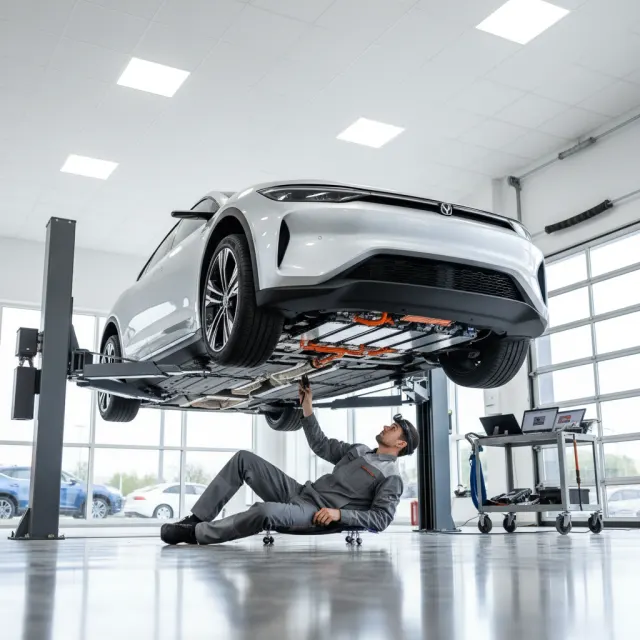
The traction battery
The high-voltage battery needs no routine maintenance from you, but its condition can be checked by the brand’s dealer network. It often has its own specific warranty, separate from the car’s general warranty: check its length and conditions in your documents, as some require a periodic check. Don’t confuse it with the conventional 12 V battery, which wears out and is replaced as on any car.
The hybrid’s cooling system
Depending on the model, the power electronics or the battery have their own cooling circuit, with its own coolant and sometimes a dedicated air filter. They are part of the manufacturer’s maintenance schedule: ask your garage to check them.
Safety: the orange cables
High-voltage cables and components are marked in orange. Work on this system must be done by a qualified technician: never touch these parts yourself.
Keep a record
Note every service and every battery check in your maintenance log: when you sell, a hybrid buyer will look at these two points first.