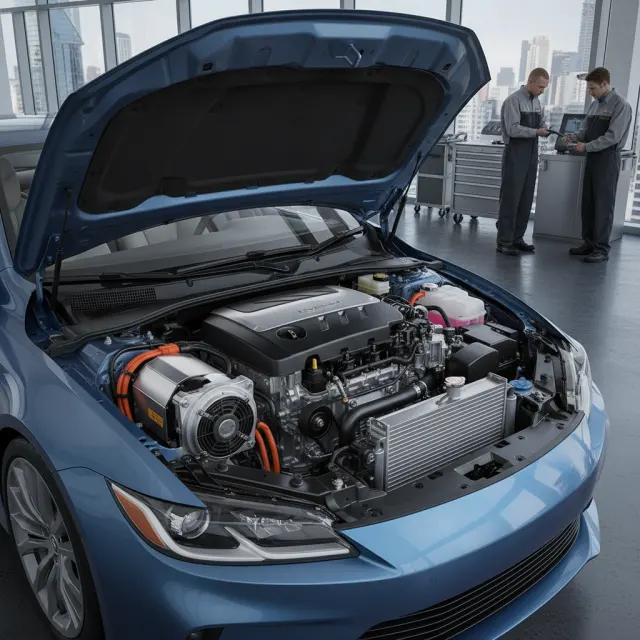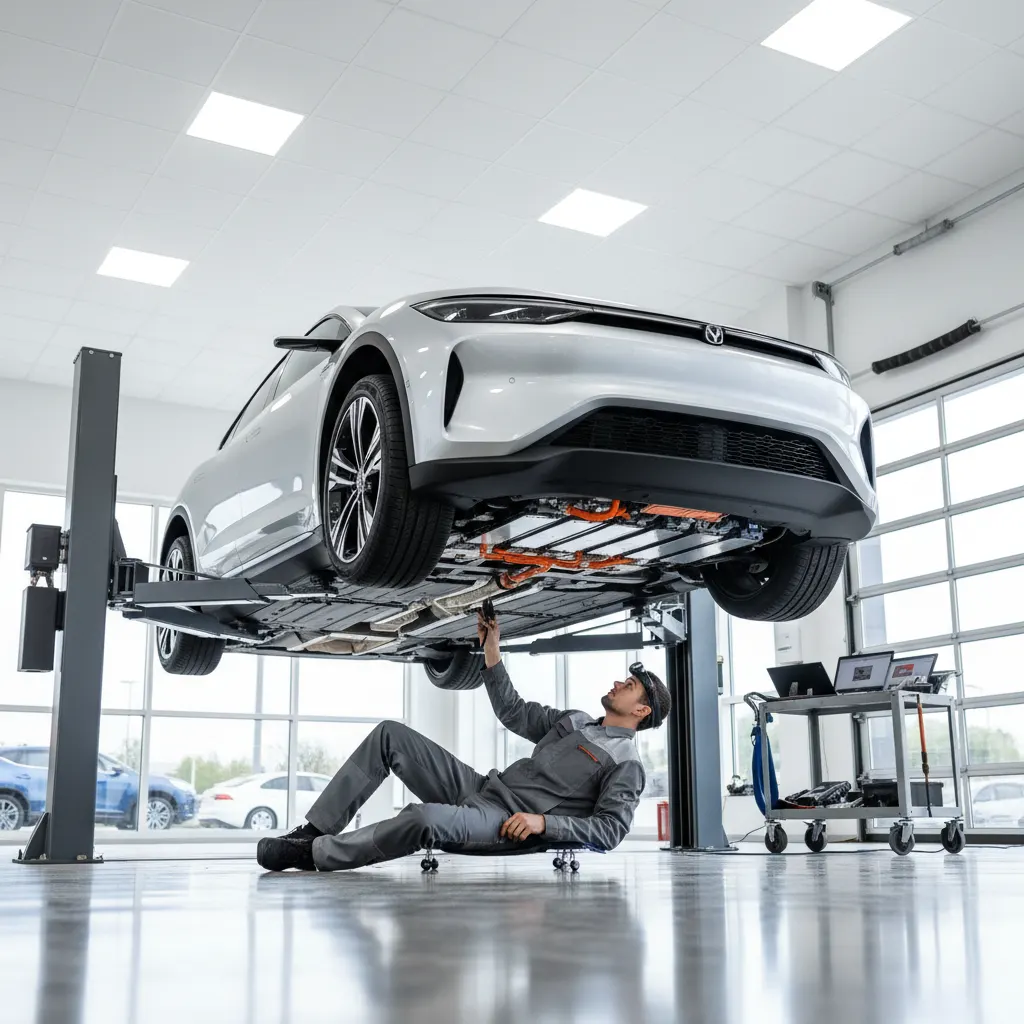
An electric car needs less maintenance than a combustion car, but it still needs maintenance. Here is what disappears, what stays, and what to keep an eye on with the battery.
What disappears
No engine oil change, no oil filter, no spark plugs, no timing belt, no clutch and no exhaust. This is the main reason why routine maintenance on an electric car is simpler.
What stays
- Tyres: an electric car is often heavier and its torque is available instantly, so keep an eye on wear and pressure.
- Brakes: regenerative braking puts less strain on them, but brakes that are rarely used can seize or corrode. Have them checked at every service.
- Brake fluid, to be replaced according to the manufacturer’s schedule.
- The cabin filter and the air conditioning, which is also often used to regulate the battery’s temperature.
- Coolant for the battery and electronics, on models that have a cooling circuit for them.
- The 12 V battery, which powers the on-board electronics and wears out as on any car.
- The roadworthiness test, at the same intervals as for a combustion car.
The exact intervals are those set by the manufacturer: the original service book gives them, and so does our maintenance schedule by model for many models.
The traction battery
Its capacity decreases slowly with age and use. It is covered by a specific manufacturer warranty, often longer than the general warranty and tied to a capacity threshold: check its length and conditions in your documents. To look after it, follow the owner’s manual recommendations on charging, particularly regarding repeated rapid charging and prolonged storage with the battery full or empty. Some brands offer a battery health check: ask for one, especially before selling.
Keep a record
Note every service, tyre change, brake fluid change and battery check in your maintenance log, with the date and mileage. When you sell, the battery’s condition and a complete history are the first things a buyer asks for.