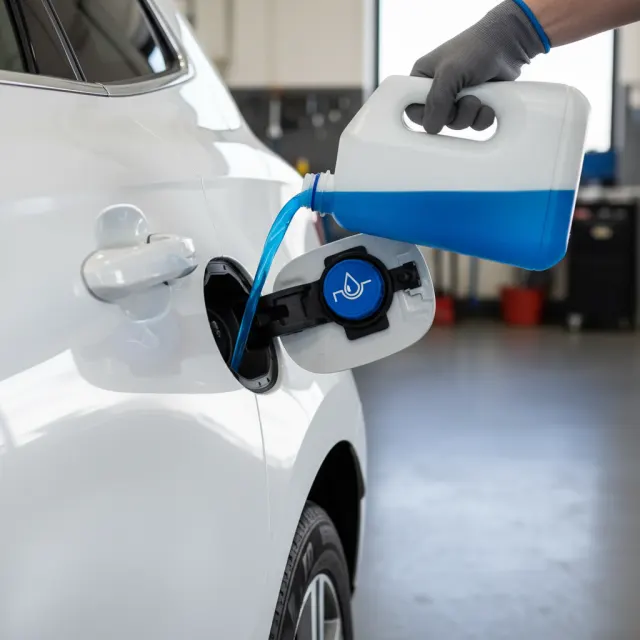
“Antifreeze” is really the coolant. You never think about it, yet it protects the engine from freezing in winter and from overheating all year round. Here is what it does, how to check it and when to change it.
What it does
Coolant circulates between the engine and the radiator: it absorbs heat from the engine and releases it through the radiator. It contains antifreeze (glycol), which lowers its freezing point and raises its boiling point, as well as additives that protect the system from corrosion. With plain water, the system can freeze; water expands as it freezes, and hoses, the radiator or the engine can crack.
Checking the level
- Always with the engine cold: never open the cap on a hot system, as the pressurised coolant can burn you.
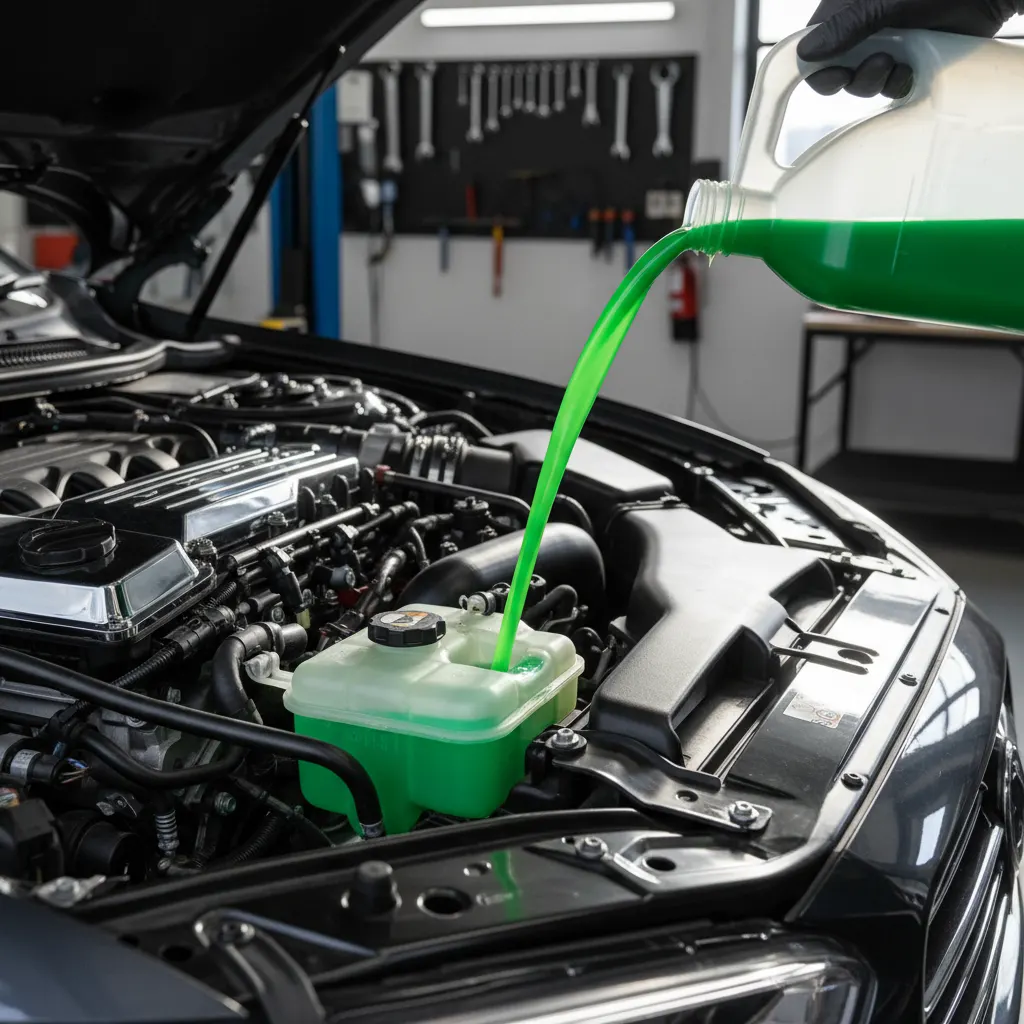
- The level is read on the expansion tank, between the MIN and MAX marks.
- A level that keeps dropping points to a leak: you need to find the cause, not just top it up.
Checking the freeze protection
A garage or car centre can measure the coolant’s protection in a few seconds (with a refractometer or hydrometer), for example before winter. To top up, use the coolant recommended by the manufacturer: avoid mixing different types of coolant, which may not combine well.
When to replace it
Its additives wear out over time. The interval depends on the manufacturer and the original coolant: it is given in the service book, and for many models in our maintenance schedule by model. Write down the date of the change so you don’t forget it.
If there is a leak or overheating
A coloured puddle under the car, an expansion tank that keeps emptying, a sweet smell when the engine is hot, or the temperature gauge rising: have the system checked quickly. If the temperature warning light comes on, stop as soon as it is safe to do so and switch off the engine: carrying on driving while overheating can seriously damage the engine, especially the head gasket.
For everything about getting your car ready for the cold, see our season-by-season car check-up.